Cleaning stainless steel: Here’s how to look after your sink
It’s here at last: your new stainless steel sink! The shine of a newly installed sink will attract plenty of admiring glances. If you want to keep it that way, you need to know how to clean and maintain stainless steel properly. This includes daily cleaning, removing limescale and monthly deep-cleaning.
It’s here at last: your new stainless steel sink! The shine of a newly installed sink will attract plenty of admiring glances. If you want to keep it that way, you need to know how to clean and maintain stainless steel properly. This includes daily cleaning, removing limescale and monthly deep-cleaning.
Every stainless steel surface is different
Stainless steel isn’t all the same! In their original form, stainless steel surfaces with a natural finish are resistant. These surfaces may be treated with both anti-limescale or lemon or vinegar cleaning agents. Linen-look, satin matt and Durinox surfaces may also be cleaned in this way.
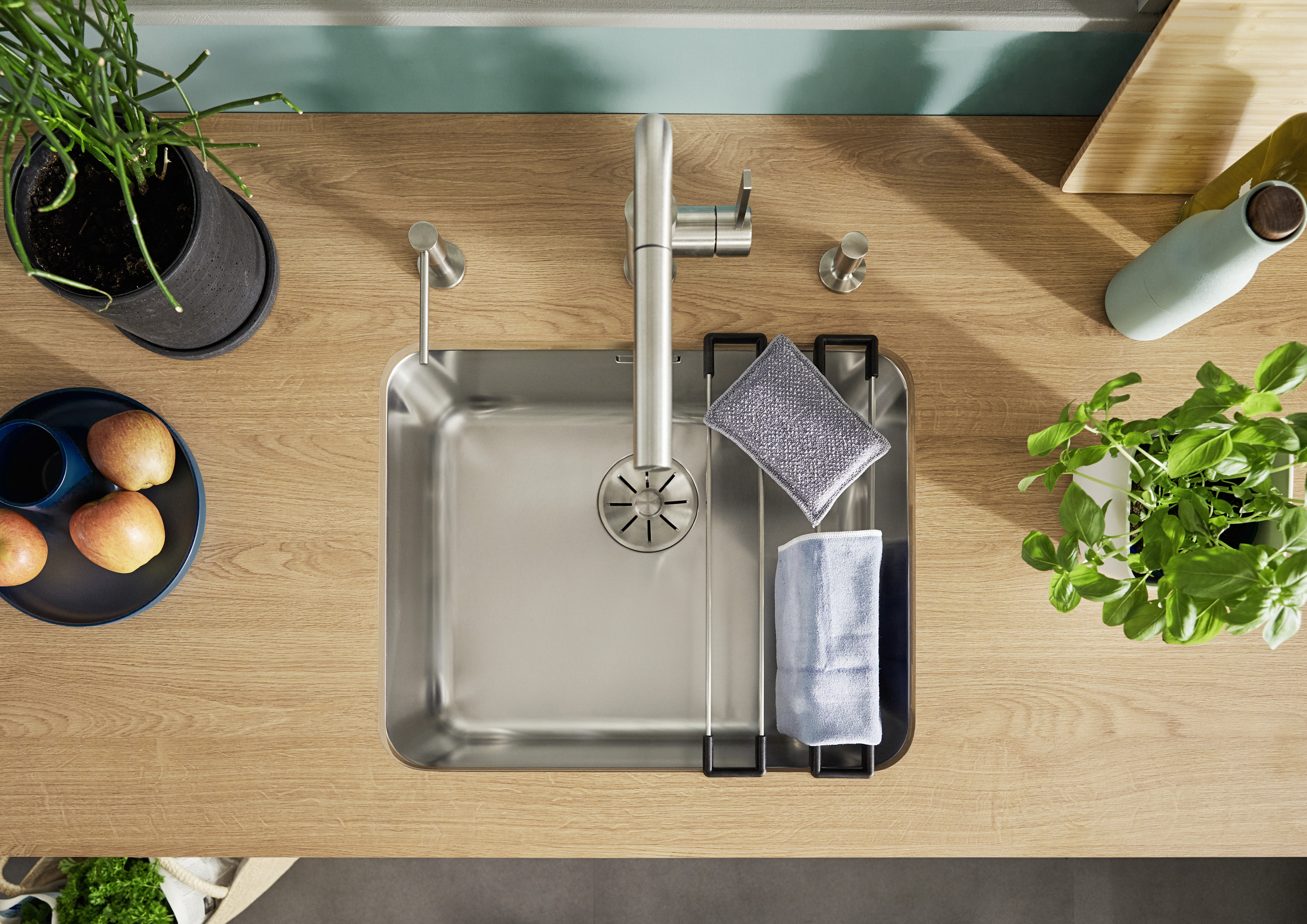
Durinox is extremely hard for uncoated stainless steel and is thus twice as resistant as conventional stainless steel surfaces; however, you should not use any polishing agents on it, either. A damp microfibre cloth or a soft sponge without any detergent are fine for daily cleaning. One major advantage is that Durinox stainless steel sinks are also impervious to fingerprints.
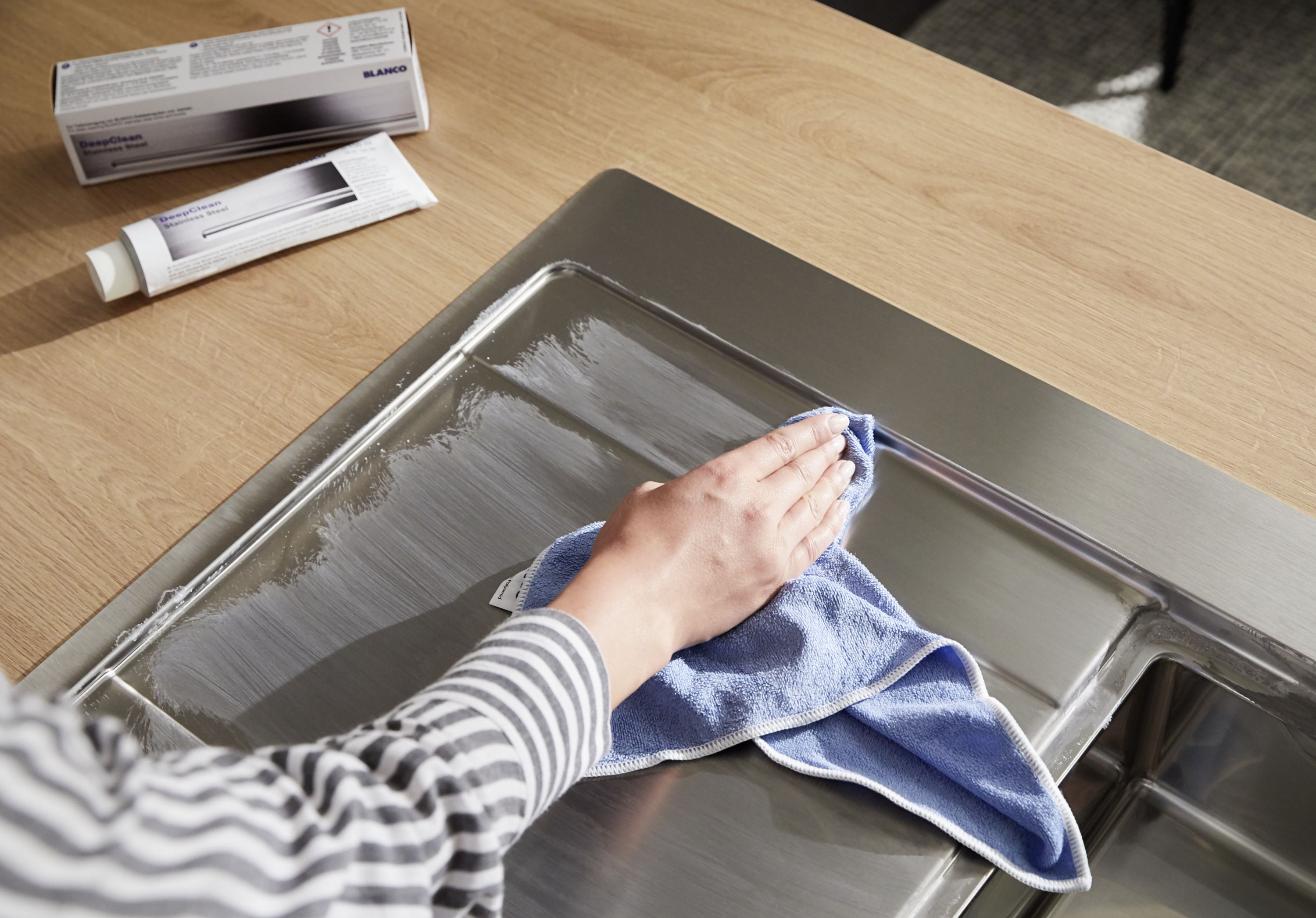
Surfaces with a stain polish or brushed finish require a little more care. These materials should be polished along the direction of brushing.
Surface finishes for stainless steel sinks:




Avoid these cleaning mistakes
Daily Cleaning
How to remove stubborn limescale
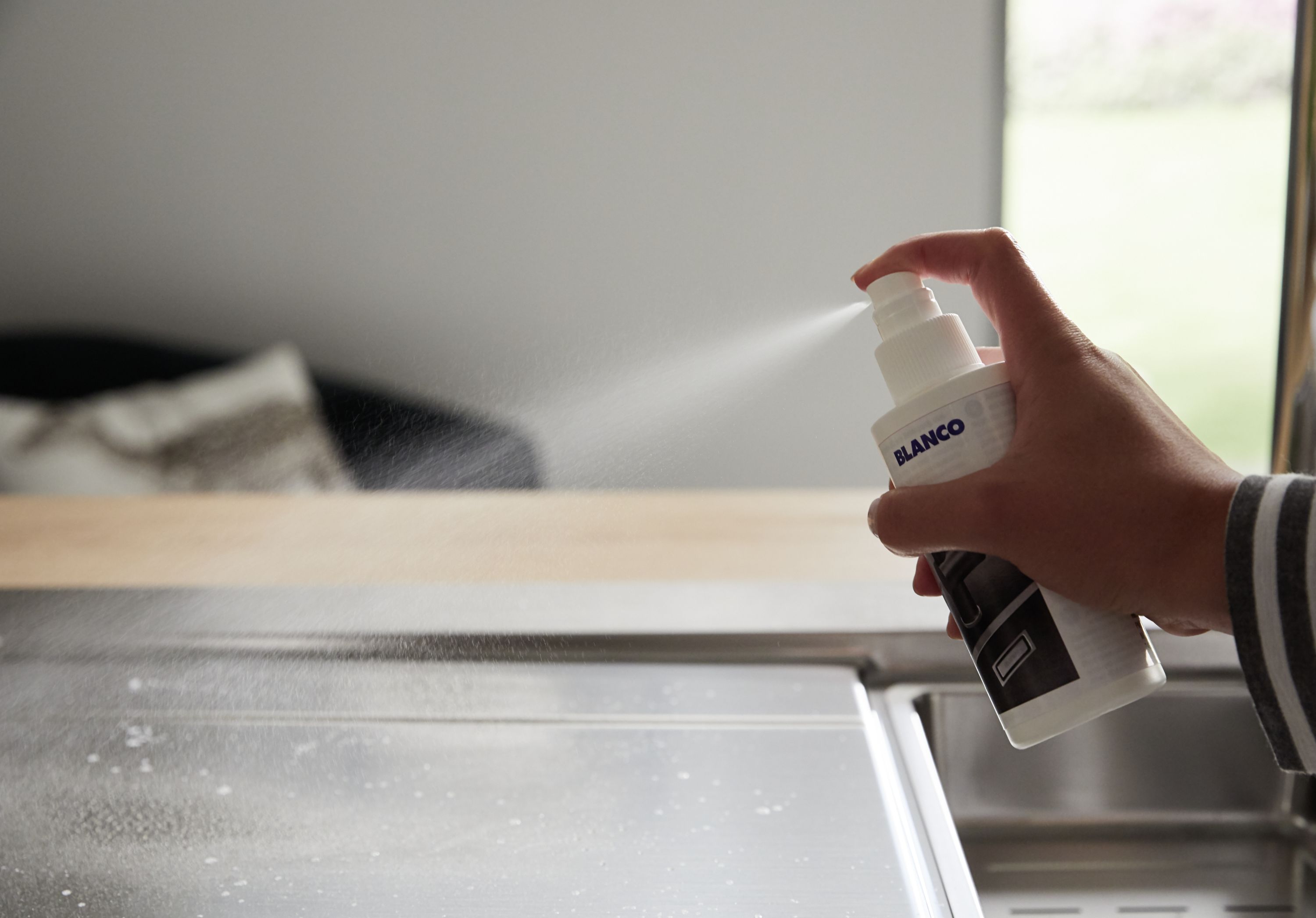
How to remove stubborn limescale
Vinegar- or lemon-based cleaning agents are good for dealing with limescale. They clean thoroughly and are easily biodegradable. However, if your cleaning agents contain any additives, you need to tread a bit more cautiously: ingredients added to such detergents tend to be too aggressive for most stainless steel surfaces. If they also contain limescale-removing substances, small particles in the fluid may rub against the stainless steel surface and cause it to change appearance..
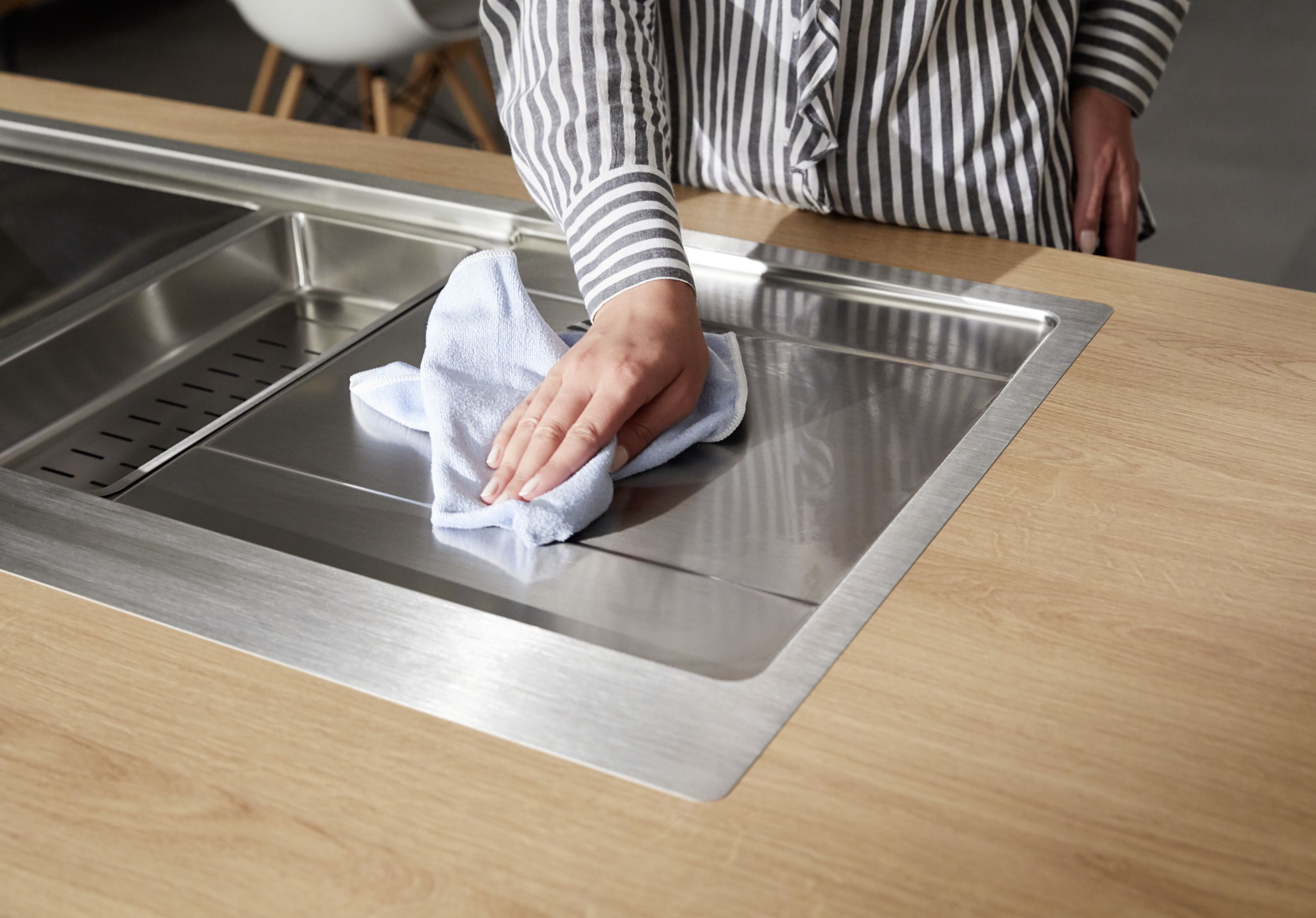
To be on the safe side, it’s best to opt for pure vinegar essence of the sort your grandmother might have used. Dilute the vinegar essence with water in a mixing ratio of 1:10.
The same applies here: when cleaning stainless steel, always work in the direction of brushing. Avoid circular movements. Afterwards, rinse surfaces down thoroughly with clean water so that no traces of the cleaning agent remain. Finally, rub the sink dry with a microfibre cloth.
Regular basic cleaning